
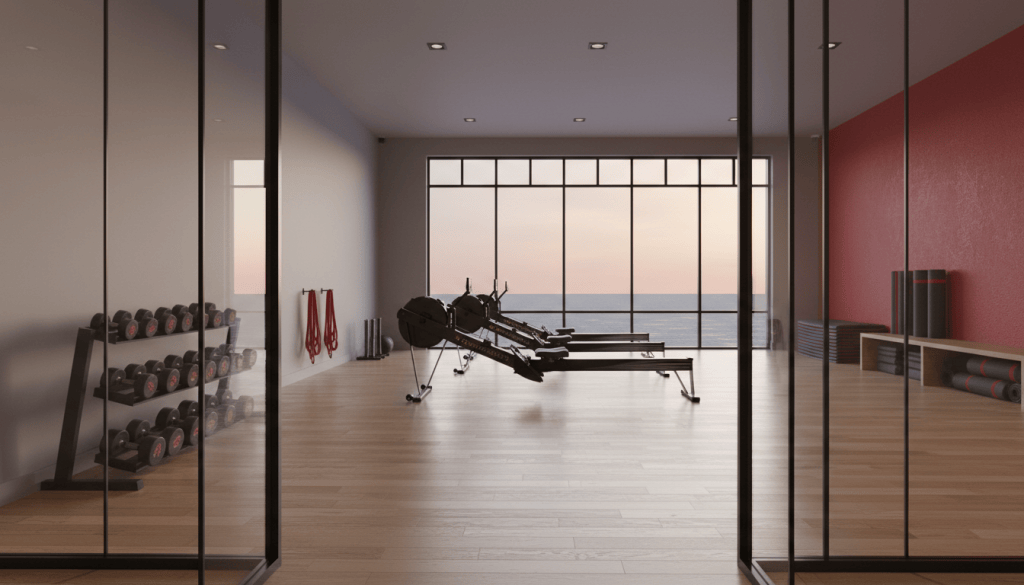
Search for “gym near me” in almost any town and the map results tell you a lot about local SEO. The gyms that show up first usually have the right category, current hours, dozens of real photos, a steady stream of reviews and a website with a page for every class and location. None of that is secret. It is ordinary upkeep, done every week, by businesses that know most new members find them on a phone map.
Criminal defense firms compete in the same map results, under the same Google rules, but many treat their profile as something to set up once and forget. This guide looks at what well-run fitness businesses do in local search, which of those habits carry over to a defense practice, and where the comparison stops working because a person facing charges is not shopping for a membership.
What this guide covers
- How Google ranks local results for gyms and law firms alike
- Categories, hours and photos that match reality
- Reviews, and why defense firms collect them differently
- Separate pages for each class, charge and location
- Keeping a profile active between big updates
- Where the gym comparison breaks down
The same three factors decide both map packs
Google says it ranks local results on three things: relevance, distance and prominence. Relevance is how well your profile and website match what someone searched for. Distance is how far you are from the searcher or the place they named. Prominence is how well known you are, judged from reviews, links, articles and other mentions across the web.
A gym and a defense firm face the same math. Neither can move closer to every searcher, so both work on relevance and prominence. The difference is that a gym owner usually sees the map pack as the front door of the business and treats it that way. Many defense lawyers have never looked closely at their own listing.
Pick the category that says what you actually do
Gyms are careful with categories. A boutique studio might choose “Yoga studio” or “Pilates studio” rather than a generic gym category, because the specific one matches what its customers search for. A climbing gym does not want to appear for powerlifting searches.
Defense firms have the same choice to make. “Criminal justice attorney” is the primary category that describes criminal defense work. General choices such as “Lawyer” or “Law firm” are broader and tell Google less. Secondary categories can add detail, but only add ones that describe work you really do. A category picked to catch extra searches can confuse both Google and the person who calls.
Hours, photos and the real front door
Good gyms keep hours exact, including holiday hours, because a member who drives over to a locked door does not come back. They also post lots of real photos: the weight floor, the class studio, the locker rooms, the parking lot. A new member wants to know what they are walking into.
Defense firms can borrow both habits:
- Set your profile hours to the hours your office is actually open, and update special hours for holidays and court closures.
- If someone answers the phone after hours, say so in your profile description and on your website.
- Post photos of the building entrance, parking, the reception area and the room where consultations happen.
- Add current photos of each attorney.
Google’s own guidance for business photos says images should represent reality, without heavy filters or AI alterations. That suits a defense firm well. A person coming in for a first consultation is often frightened, and seeing the door and the parking situation ahead of time takes away one small worry.

Reviews: borrow the routine, change the ask
Gyms tend to collect reviews well because they ask at good moments: after a first month, after a member hits a goal, after a popular class. They make it easy with a link or a QR code at the front desk, and staff reply to reviews, good and bad, in a friendly voice.
Defense firms can copy the routine. Pick a consistent moment to ask, usually when a case closes, and send a direct link to your review page. Make replying to reviews someone’s job.
The ask itself has to change. Many defense clients do not want their name next to a review of a criminal case, and that is their right. Some will leave a review if you mention they can use initials or a first name. Never offer anything of value in exchange, which goes against Google’s policies and the advertising rules in most states. Be careful when replying to criticism too. The ABA’s Formal Opinion 496 says lawyers generally may not reveal information about a client’s case when responding to an online review, so a short, polite reply that offers to talk offline is the safe choice. Check your own state bar’s rules as well.
A page for every class, a page for every charge
Look at the website of a well-run fitness studio and you will usually find a separate page for each class type: spin, strength, yoga, boxing. Each page says what the class is, who it suits, what to bring and when it runs. Those pages rank for searches like “spin class downtown” in a way one general “Our classes” page never could.
The defense version is a separate page for each charge you handle. A DUI page, a domestic violence page, a drug possession page, a theft page and so on. Each one should explain the charge under your state’s law, what penalties are possible, what happens next in your local court and how your firm handles these cases. One page that lists every charge in a sentence will lose to firms that give each charge its own page.
Multiple locations need real pages
Fitness chains with several locations give each one its own landing page with the address, hours, staff and schedule for that site, linked to that location’s Google profile. Pages that just swap the town name are easy to spot and rarely rank.
Defense firms with more than one office should do the same, and only for offices where they actually meet clients. Google’s guidelines require a real location staffed during stated hours, and virtual offices or mail drops can get a profile suspended. For counties where you appear in court but have no office, a page about that courthouse can still help if it contains real local information, such as how arraignments are scheduled or how the local diversion program works.
Keep the profile active
Gyms post often: new class schedules, holiday hours, member challenges, a new piece of equipment. Most of it is small. Over time it shows Google and searchers that the business is open and paying attention.
A defense firm will not post as often, and doesn’t need to. A short update now and then is enough. Some useful ideas:
- A plain-language note when a new state law takes effect that affects a charge you handle
- Holiday hours and court closure reminders
- A new attorney joining the firm
- A link to a new charge or courthouse page on your website
Keep posts factual and check them against your state’s advertising rules before they go up, the same as any other ad.

Where the gym comparison stops working
Some fitness marketing does not translate, and it helps to be clear about it.
Gyms want repeat visits, social sharing and members who post check-ins. Defense clients usually want the opposite. They hope to need you once and would rather nobody knew. Tactics that depend on public enthusiasm, such as photo contests or tagging the business, do not fit.
Gyms can run constant promotions. Lawyer advertising rules limit what you can say about results and comparisons, and many states have specific rules on terms like “specialist” or “expert.” Check your state bar’s rules before making any claim on your site or profile.
The timing is different too. Someone choosing a gym might compare three options over a week. Someone whose son was arrested last night is choosing within hours, often from the map pack on a phone. That raises the stakes on the basics: the right category, a working phone number, accurate hours and a website that loads quickly and shows how to call.
Questions defense lawyers ask about local SEO
Do I need a separate Google profile for each office?
Each real office where you meet clients during stated hours can have its own profile. Locations without staff, such as virtual offices, go against Google’s guidelines.
How many photos should I add?
There is no magic number. Start with the entrance, parking, reception, consultation room and each attorney, then add new photos when something changes.
Will posting on my Google profile improve my ranking?
Posts are a small part of local SEO at most. They are more useful for keeping searchers informed than as a ranking tactic, so keep them occasional and accurate.
Can I ask clients to mention a specific charge in their review?
You can ask a client to describe their experience in their own words, but do not script reviews or offer anything for them. Some clients will prefer not to mention the charge at all, and that is fine.
This guide is part of SBD Marketing’s series on criminal defense marketing. SBD Marketing works only with criminal defense law firms, helping them rank in Google, the map pack and AI search.
SBD Marketing · info@sbdmarketing.agency · Book a call: sbdmarketing.agency/scheduling · Serving criminal defense law firms across the USA · sbdmarketing.agency


Leave a Reply